
Clinical Director - Mental Health & Addiction Service
Mid Central - Health New Zealand |
Te Whatu Ora
CANDIDATE INFORMATION PACK
Scroll down to access everything you need.

Executive Summary
- Executive clinical leadership role within a major public health system, guiding Mental Health & Addiction services across the MidCentral district.
- Lead the evolution of a wellness model of care delivery, strengthening integrated, culturally grounded and equity‑focused models of care across community, primary and specialist settings.
- Join a high-performing leadership team to shape system transformation while driving clinical governance, service performance, workforce wellbeing and community partnership.
THE OPPORTUNITY
Aotearoa’s health system is undergoing significant transformation, with Health New Zealand | Te Whatu Ora MidCentral committed to delivering Pae Ora — a future where all communities achieve equitable health outcomes.
Working in close partnership with the Group Manager, the Clinical Director will help shape models of care that are wellness focused, more sustainable and more responsive to the needs of Māori, Pacific, and underserved communities. This includes building the Mental Health & Addictions team through targeted recruitment to address current vacancies, reviewing services and placement within the service structure, strengthening clinical governance, and supporting innovative approaches across home, community and hospital pathways.
There is great opportunity to influence not only how Mental Health & Addiction services operate within MidCentral, but also how they contribute to a truly integrated health and social care system.
THE ROLE
Reporting to the Chief Medical Officer and serving as a key member of the senior leadership team, the Clinical Director holds joint accountability — alongside the Group Manager — for the leadership, planning, delivery and evaluation of all Mental Health & Addiction services across the district.
Working closely with clinical leaders, whānau, iwi, Pacific aiga, NGOs and community partners, the Clinical Director will:
- Provide strong clinical governance, ensuring safe, high‑quality and person-centred care that is wellness focused.
- Lead service review and redesign to ensure continuous improvement and strengthened integration across primary, community and specialist settings.
- Work with the Group Manager to recruit to current staff vacancies with a particular focus on addressing current reliance on locum Medical Officers.
- Drive performance, workforce capability and service sustainability.
- Work closely with Group Manager Māori to embed equity, Te Tiriti principles and culturally grounded models of care.
- Influence system-level strategy while ensuring effective day‑to‑day clinical delivery.
This position combines 0.5 FTE clinical leadership/management with ongoing 0.5 FTE clinical practice, requiring both strategic foresight, operational discipline, and clinical credibility. The Clinical Director will provide thoughtful challenge, contribute confidently at executive level, and model the behaviours expected across a high‑performing, values-driven organisation.
THE CANDIDATE
The ideal candidate will be a respected Senior Medical Officer with at least five years’ experience in Mental Health & Addiction services, bringing strong professional credibility and a commitment to continuous development.
They will be an experienced and capable leader with:
- Emotional intelligence, cultural humility, and the ability to build trust with diverse communities and teams.
- Strength in leading change, fostering collaboration and enabling high‑performing interdisciplinary practice.
- A strategic mindset, able to challenge respectfully and influence system-wide improvement.
- A deep commitment to equity, Te Tiriti o Waitangi, and culturally responsive mental health care.
- Operational acumen across budgets, workforce planning, service performance and clinical governance.
This role is ideally suited to a clinically credible, values‑aligned leader who combines heart with discipline — someone ready to honour the region’s needs while helping shape the future of Mental Health & Addiction services for MidCentral communities.
For a confidential discussion, please get in touch with:
Pete Carter
HG Principal Consultant
M. +61 (0)448 729 077 | M. +64 (0)27 287 5937
E. pcarter@hardygroupintl.com
MidCentral - Health New Zealand | Te Whatu Ora
Building the future of health
Te hanga i te oranga hauora a meake nei
Te Whatu Ora leads the day-to-day running of the health system across New Zealand, with functions delivered at local, district, regional and national levels. It weaves the functions of the 20 former District Health Boards (DHBs) into its regional divisions and district offices, ensuring continuity of services in the health system. Te Whatu Ora manages all health services, including hospital and specialist services, and primary and community care. Hospital and specialist services are planned nationally so they can be delivered more consistently across the country. Health New Zealand | Te Whatu Ora also manages national contracts.
Primary health, wellbeing and community-based services are planned and then purchased through the four regional divisions of Te Whatu Ora. Each region is located closer to the local community, to develop and implement plans based on local needs to improve the health and wellbeing of communities.
Te Whatu Ora is also responsible for improving services and outcomes across the health system.
The goal is to build a healthcare system that works collectively and cohesively around a shared set of values and a culture that enables everyone to bring their best to work and feel proud when they go home to their whānau, friends, and community.
Our History
On 1 July 2022, Te Whatu Ora | Health New Zealand was established under the Pae Ora (Healthy Futures) Act 2022. It replaced 20 District Health Boards (DHBs), 8 health agencies, and absorbed some functions from the Ministry of Health.
This change was to strengthen better health outcomes for everyone in New Zealand by ensuring people have access to the right healthcare at the right time no matter where they live.
Our Role
Our role is to deliver quality, compassionate and affordable healthcare for everyone in New Zealand.
We lead the day-to-day planning and delivery of publicly funded hospital, primary and community health services. We:
- design, arrange and deliver health services to achieve pae ora (healthy futures) for everyone in New Zealand
- encourage, support and maintain community participation in health improvement and service planning
- promote health and prevent, reduce and delay ill-health, and collaborate with other agencies, organisations, and people to address the factors that influence health
- achieve the best possible health outcomes for all
- ensure that planning and service delivery responds to people’s aspirations and needs.
The services we fund and deliver include:
- public health services
- primary and community care services
- hospital and specialist services
- mental health and addiction services
- Hauora Māori health services.
We are only one part of the New Zealand health system. Learn about the whole health system and how the different organisations work together on the Ministry of Health website.
New Zealand's health system — Ministry of Health
Our Values
Our 4 values and principles are taken from Te Mauri o Rongo | The New Zealand Health Charter.
Te Mauri o Rongo | The New Zealand Health Charter
Wairuatanga
We work with heart.
Rangatiratanga
We support our people to lead at all levels.
Whanaungatanga
We are a team of teams working together for a common purpose.
Te Korowai Āhuru
We cloak our people to provide them with safety and comfort.
Our strategic priorities
Our strategic priorities, described in our Statement of Intent, are to:
Deliver on the New Zealand Health Plan | Te Pae Waenga
Empower and enable leadership at all levels.
New Zealand Health Plan | Te Pae Waenga — Health NZ
Role Specification
In close consultation with the Chief Medical Officer, and in partnership with the Group Manager of the group, the purpose of the role is to:
o Demonstrate effective clinical leadership and decision making
o Continuously define, re-design and develop the Group’s (clinical) services using a consultative and co-design process with the outcome of improving health and wellbeing, experience of care, and the health of populations
o Contribute to organisational decision making as part of the organisations Leadership team
o Develop, monitor and take ownership for the performance of the service against targets and long-term clinical outcomes of services within the Group in a manner that is consistent with the vision, strategic imperatives and values of the organisation and a whole of system integrated care model.
- The role will ensure a person and community centred focus that will establish the Group so that it is integrated across primary, community and specialist care providers, as well as with and between other Groups. The incumbent will demonstrate the districts values and behaviours referenced in Appendix A of the Position Description.
- The Clinical Director and Group Manager will be jointly accountable for the leadership of their Group. Together they will lead clinical governance as well as the planning, procurement, delivery, monitoring and evaluation of their services. This role will provide clinical and specialist input into the planning, procurement, delivery, monitoring and evaluation of services, whether that be in the home, in a primary or community setting, or in a hospital environment.
This role requires strong leadership, strategic collaboration, and advocacy to ensure that health services uphold the principles of Te Tiriti o Waitangi and contribute to meaningful, long-term improvements in health outcomes.
This is a part time clinical role, coupled with the 0.5FTE clinical Leadership/Management component.
Service Delivery
Delivery of safe and effective services in partnership with clinicians
- Develop competent, motivated and well-trained staff who are focused on providing the best possible patient/client care by agreeing accountabilities and standards of performance and regularly providing feedback, taking corrective action as appropriate and acknowledging good performance
- Monitor the Service’s performance and take action as required to ensure services are delivered and actively seek quality improvements
- Maintain a safe environment for patients/clients, staff and the public including facilities and equipment.
- Service delivery and capacity is managed within available resources.
- Standards of care are assured and documented
- Systems are in place to facilitate continuity of quality patient/client care, during the patient/client journey
Financial and Contractual Performance
- Contribute to the completion of capital budget requirements
- Support the Group Manager in managing operational budget as delegated by the Group Manager
- Ensure appropriate financial delegations, processes and quality controls are adhered to with regards to medical staffing and service delivery with action taken to correct performance variance/gaps. Monitor service performance and take action as required to ensure compliance with contract and quality standards
- Communicate operational and financial parameters and risks to clinical teams and the plans for addressing areas of concern including opportunities for improvement
- Lead the negotiation of service improvements with relevant services within the Group, with specific focus on performance targets
Planning
- Review purchase requirements and support the development of attainable and measurable objectives and targets for the service
- Provide remedial action when required, to ensure contract requirements are met through the development and implementation of strategies to correct performance aligned to established criteria
- Debate issues constructively, working collaboratively with other service team members and clinical leaders
Strategic Leadership and direction
- Provide strategic direction and leadership to embed the principles of Pae Ora across health services within the Group to ensure that the services are responsive to the aspirations and needs of Māori and Pacific communities.
- Champion the effective implementation of local and regional strategies to improve health outcomes and eliminate barriers to equitable access.
- Strengthen and maintain trusted relationships with clinical staff, whānau, Pacific aiga, hapū, iwi, and communities, ensuring services reflect holistic and culturally grounded approaches to care and rehabilitation.
- Proactively identify and manage risks, addressing systemic challenges that impact Māori and Pacific health equity, while ensuring accountability for critical risks and complex issues
Te Tiriti o Waitangi
- Prioritise Māori health gain and champion equitable health outcomes for Māori, Pacific, and other underserved populations, ensuring that Te Tiriti o Waitangi principles are embedded across all levels of health service design and delivery.
- Support and advocate for tangata whenua-led and mana whenua-led transformation, ensuring that Māori self-determination (mana motuhake) is central to the design, delivery, and monitoring of healthcare services.
Health and Safety
- Health New Zealand | Te Whatu Ora, Te Pae Hauora e Ruahine o Tararua – MidCentral, is committed to maintaining and promoting the health and safety of all its staff, contractors, volunteers and tamariki and rangatahi. In this role, your duties are:
- Not to do anything that puts your own health and safety at risk
- Not to do anything that puts others health and safety at risk
- To follow all health and safety policies and procedures
- To follow all reasonable health and safety instructions
- (You have the right to cease work if you believe that you, or others, are at risk of serious harm).
View the full scope of these in the Position Description.
Essential
- A Senior Medical Officer qualified to work in Mental Health and Addiction Services with at least 5 years experience as a SMO
- Demonstrate evidence of continuing professional development through, for example, professional guidance from an appropriate professional lead, attendance at relevant courses/ seminars/conferences; reading relevant literature; and maintenance of professional standards
- Demonstrate experience in having worked in a leadership role and part of a wider leadership team.
- Demonstrate evidence in leading and managing change (process enhancements)
- Demonstrate awareness of equity issues across the sector including, but not limited to Māori Health
- Demonstrate a thorough understanding of the various Mental Health and Addiction Services provided within Mid Central Health and an ability to evidence skills and experience to lead services to address service challenges
- Possess advanced verbal and written communication skills
Desirable
- Experience of financial and budgetary implications in decision making
- Possess experience in leading medical and health care teams
- Sound understanding of relevant legislation
- Experience in leading culture change amongst medical staff and the wider multidisciplinary team within a clinical environment
1. Demonstrated senior clinical leadership within Mental Health & Addiction Services
Evidence of holding a senior medical leadership role (minimum 5 years as an SMO) with responsibility for clinical governance, service performance, multidisciplinary collaboration, and systems of safe, high‑quality care.
2. Proven capability in service redesign, change leadership and continuous improvement
Demonstrated experience leading service transformation, redesigning models of care, improving processes, and driving measurable service performance improvements within complex clinical environments.
3. Commitment to equity and ability to embed Te Tiriti o Waitangi in clinical practice and system design
A track record of applying equity principles, partnering with Māori communities and stakeholders, strengthening culturally safe practice, and ensuring care delivery reflects Te Tiriti obligations and improves outcomes for Māori, Pacific and underserved populations.
4. Strategic and operational leadership across multidisciplinary teams
Experience contributing at senior or executive leadership level, including workforce planning, operational oversight, risk management, financial awareness, and the ability to lead interdisciplinary teams through complex decision-making and competing priorities.
5. Highly developed communication, relationship management and stakeholder engagement skills
Proven ability to build strong relationships with clinical teams, community partners, government agencies and NGOs; engage effectively with whānau and diverse communities; and communicate complex clinical and strategic matters clearly and persuasively.
The Clinical Director, Mental Health & Addiction Service reports directly to the Chief Medical Officer - MidCentral Hospital and Specialist Services
Internal
- Heads of Departments/ Medical Leads
- Senior medical staff
- Resident medical officers
- Health Service Managers and teams across services and specialist community and regional services
- GDO and Leadership Team
- Hospital Co-ordination Unit
- Duty Managers
- Other professional Leads
External
- Health New Zealand / Te Whatu Ora Regional and National Office teams
- Other service providers
- Primary and NGO sector
- Regional/other District-wide services
- Ministry of Health/National Health Board
- HQSC
- Police
Key Relationships and Engagement:
Whānau and Communities: Lead engagement with whānau, hapū, iwi, Pacific aiga, and local communities to ensure that health services are culturally safe, community-driven, and responsive to the aspirations and needs of Māori, Pacific, and underserved populations.
Iwi Māori Partnership Boards (IMPBs): Work in partnership with IMPBs to integrate Te Ao Māori perspectives into health service planning, ensuring alignment with Te Tiriti o Waitangi principles and Māori self-determination (mana motuhake).
Health and Social Service Providers: Strengthen relationships with Māori, Pacific, and mainstream health and social service providers, ensuring a holistic and integrated approach to health and wellbeing that reflects whānau ora and collective wellbeing models.
Government Agencies: Coordinate efforts with other government agencies to align health initiatives with broader social and economic policies, ensuring that Māori and Pacific health priorities are embedded in national and regional strategies.
Advocacy and Equity Leadership: Ensure that all advocacy efforts and system-level initiatives are equity-focused, promoting better health outcomes for all New Zealanders while addressing the historical and systemic inequities impacting Māori and Pacific communities.
Please speak to our HG Principal Consultant.
Service Location: Te Whatu Ora Te Pae Hauora o Ruahine o Tararua MidCentral - Palmerston North
The closing date for applications is Monday, 6 April 2026
The reference number to include in your application is H26_5361
Note: Please use the online platform to submit your application. It will not be accepted via email. (Please see the "Apply Now" button below)
If you require assistance in submitting your application online, please get in touch with Executive Search Coordinator, Aldie Zuñiga: M: +61 (0)494 101 082 / E: azuniga@hardygroupintl.com
Your application must include:
- 1.Cover letter addressed to the Principal Consultant;
- 2.A written response addressing the key selection criteria; and
- 3.An up to date copy of your Curriculum Vitae.
It Is standard practice for HardyGroup to acknowledge receipt of your application no later than the next business day. We request that if you do not receive the acknowledgement, you contact the search coordinator listed above as soon as possible after the 24-hour business period and arrange to resend your application if necessary.
For a confidential discussion, please contact:
Pete Carter
HG Principal Consultant
M. +61 (0)448 729 077 | M. +64 (0)27 287 5937
E. pcarter@hardygroupintl.com
LIVING AND WORKING IN PALMERSTON NORTH
Palmerston North is home to approximately 91,00 people (according to the Stats NZ 2025 census data), making it New Zealand’s eighth largest urban area by population. Palmerston North offers a relaxed urban lifestyle coupled with a strong sense of community and is often described as having the ideal combination of vibrant city life and incredibly accessible rural activities.
Often referred to as "Palmy" by the locals, Palmerston North is known for its fresh green landscapes and a friendly, laid-back vibe. A growing cultural scene, the lovely network of parks and gardens and cycleways, and student-centric nightlife make it a popular spot for both residents and visitors.
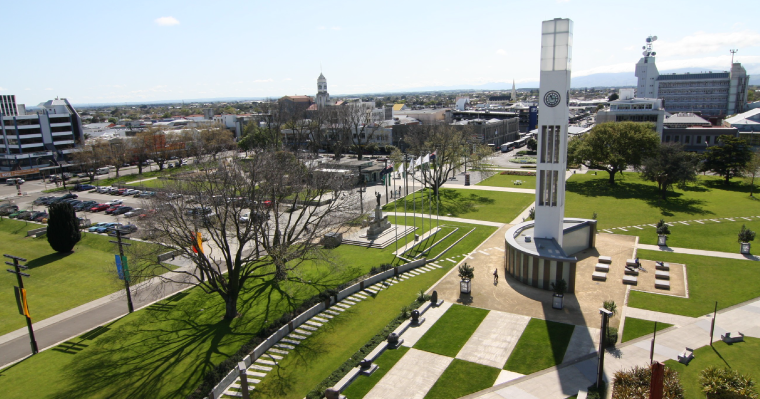
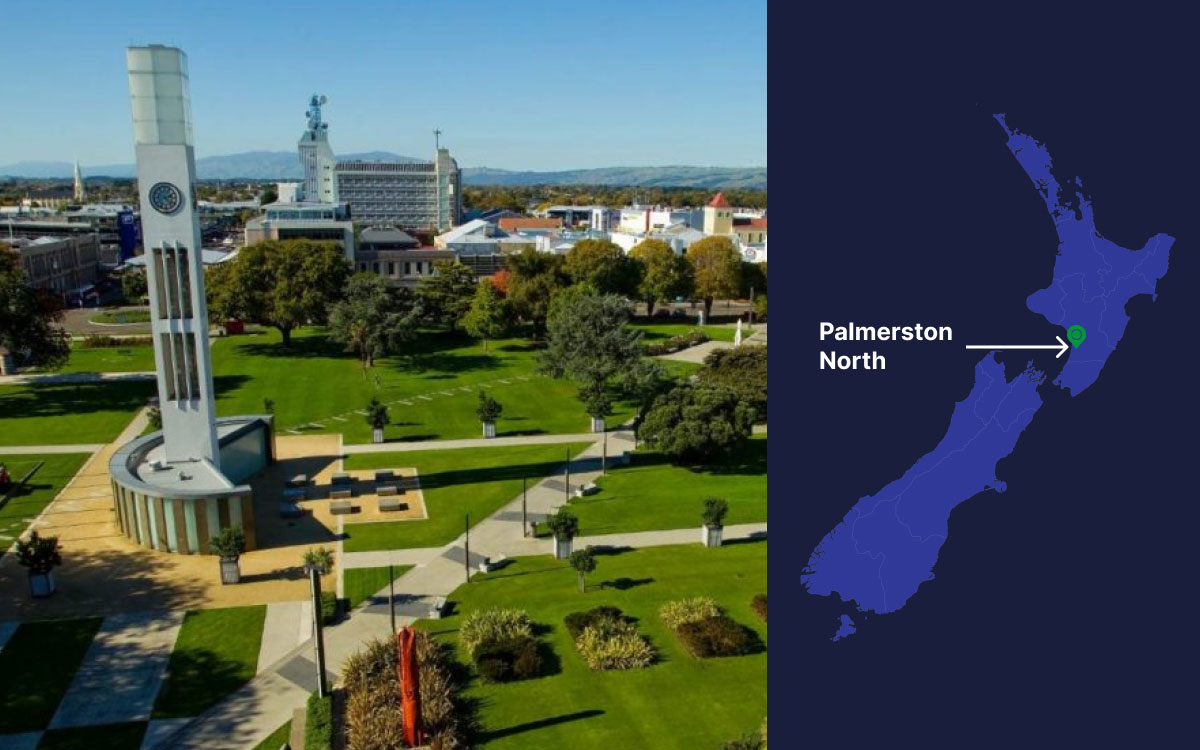
Where Is Palmerston North Located?
Palmerston North is located in the Manawatū-Whanganui region of the lower North Island of New Zealand. Nestled in the Manawatu plains, Palmerston North’s central location makes it a strategic hub for access to both the west and east coasts, as well as being a convenient stop for travel between Wellington and Auckland.
Cost Of Living In Palmerston North
Is it expensive to live in Palmerston North? Compared to larger cities like Auckland and Wellington, Palmerston North generally offers more affordable housing both for renters and buyers. Average daily living costs are broadly similar to the rest of New Zealand.
Essential services such as electricity and internet are readily available with a range of providers and plans. These services are typically charged at comparable rates across New Zealand.
Palmerston North Demographics
The average age of people living in Palmerston North is approximately 32.7 years (median age according to the Palmerston North City Council). Slightly younger than the national median age of 38.1. This is potentially influenced by the city's significant student population.
Palmerston North is a diverse city with a mix of ethnicities, reflecting New Zealand's multicultural population. Major ethnic groups include European, Māori, Asian, and Pacific Peoples, among others.
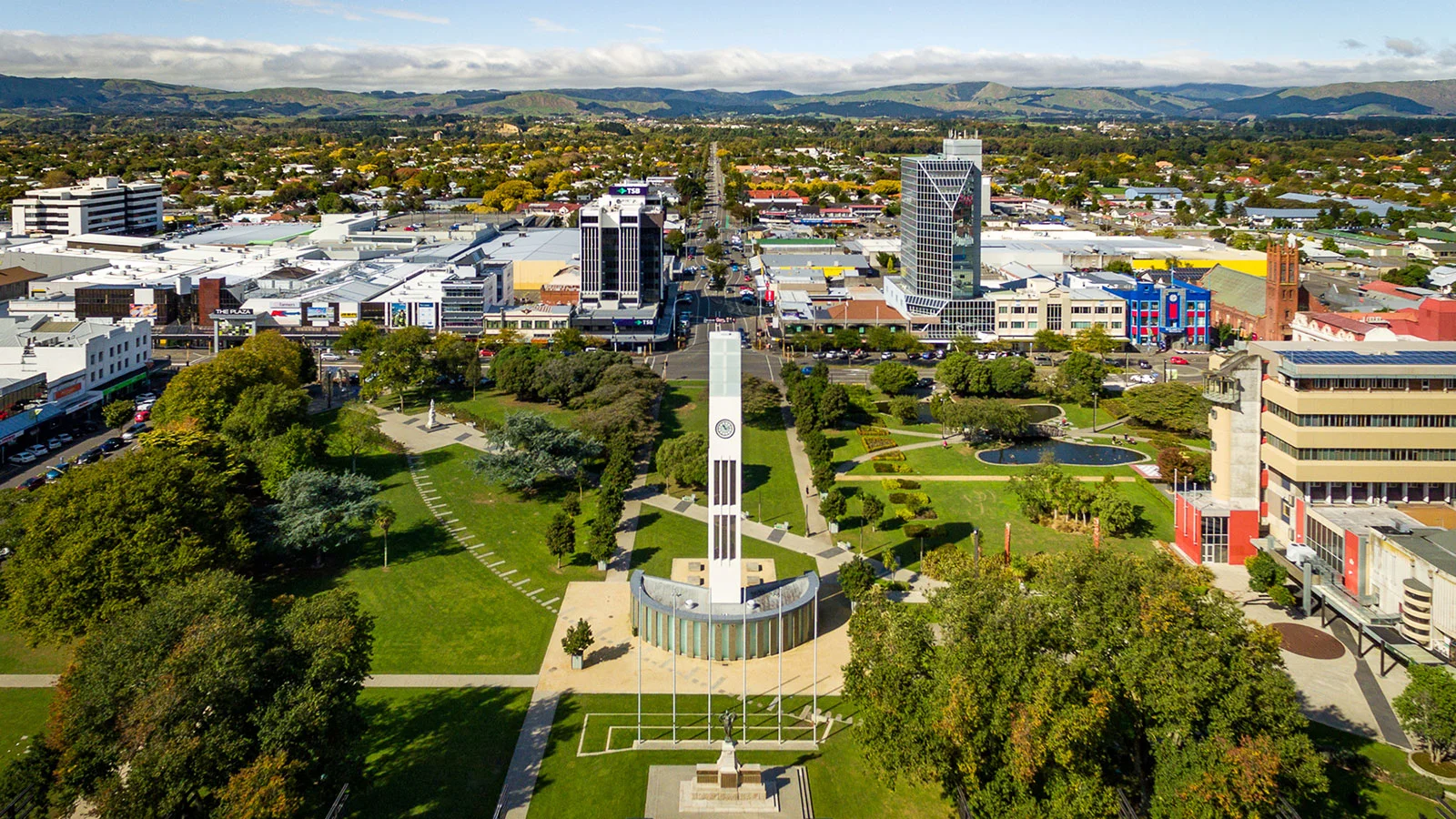
Palmerston North Weather And Climate
Palmerston North experiences mild to warm summers and cool winters in general. Summers typically see average temperatures ranging from 20 to 25 degrees Celsius, with occasional hotter days.
Winters are generally cooler, with average temperatures usually between 8 and 15 degrees Celsius, with low fog and mist common in the middle of winter. The nearby Tararua Range sees snowfall during winter months, but snow on the ground in Palmy is rare.
Education Services In Palmerston North
Palmerston North is well-regarded for its educational opportunities. The New Zealand primary and secondary education system is freely available to residents, and there are also a number of reputable private schools in the city.
Higher education is a big part of the Palmerston North community because the city is home to Massey University, a prominent New Zealand university with a strong focus on agriculture, science, and veterinary medicine. Other tertiary institutions, such as Universal College of Learning (UCOL), also provide a wide range of vocational and technical training options, making Palmerston North a key educational hub in the lower North Island.

Top 5 Things To Do In Palmerston North
Living and working in Palmerston North means you have instant access to all the great activities in the area. Here are our top 5 things to do in Palmerston North!
Victoria Esplanade. Centrally located, the Victoria Esplanade is an extensive park that covers over 100 hectares and offers a wide range of recreational activities, including walking and cycling paths, a miniature railway, a nature conservatory, and beautiful gardens, making it a popular spot for both residents and visitors.
NZ Rugby Museum. One of Palmerston North’s most famous claims to fame is the New Zealand Rugby Museum. A testament to the region's rugby focus, the museum offers insight into the history of the sport and a collection of some of the world’s rarest rugby artefacts.
Art Art And More Art! Continuing your cultural immersion, Palmerston North is also home to a variety of art galleries, including the Zimmerman Art Gallery, as well as several heritage collections and even a liberal sprinkling of urban street art, which you can find across the area.
Wildbase Recovery Centre. Admission to the Central Energy Trust Wildbase Recovery Centre is free! The centre highlights local native wildlife that have been recently rehabilitated at the nearby treatment facility at Massey University. You will find multiple aviaries to explore which include four rehabilitation, two breeding and one walkthrough.
Arapuke Forest Mountain Bike Park. For a slightly more adventurous outdoor experience, you can head out to the Arapuke Forest Mountain Bike Park, located just over 10km from the city. Once there, you have access to more than 30km of single track from grade 2-6 with a variety of trail types including flow, jumps, technical and extreme.
Healthcare Facilities In Palmerston North
The district catchment for Health New Zealand | Te Whatu Ora MidCentral covers the Manawatū, Horowhenua, Tararua, and Ōtaki regions, serving a population of over 190,000 people. Most of these residents are concentrated within the Palmerston North urban area and its immediate surrounds.
The primary healthcare facility for the region – the Palmerston North Hospital - includes a dedicated Intensive Care Unit, Coronary Artery Unit and Neonatal Unit as well as one of the largest trauma centres in New Zealand. In recent years, Palmerston North Hospital has undergone various upgrades and developments to enhance its facilities and services for the growing population. The hospital is a teaching centre and is linked with both the Auckland and Otago medical schools.
Health NZ MidCentral also operates several smaller rural health centres and community initiatives throughout the district. Health services provided include a focus on Māori and Pasifika health, general medical and surgical services, older persons' health and rehabilitation, specialist mental health services, and women's and children's health services.
Working In Palmerston North
Palmerston North offers a welcoming environment to newbies along with a stable job market, making it an excellent city for those considering full or part-time employment, no matter the industry. For health professionals, the hospital and community health services frequently have roles available across different specialties.
Beyond healthcare, Palmerston North's job opportunities are pretty diverse, with a wide variety of roles available in education, research, agriculture, manufacturing, and the service sectors. Massey University and the various research institutions in the area provide promising professional opportunities too. Jobs within national organisations as well as smaller local businesses provide a range of career pathways for individuals and families relocating to the city.
ABOUT US
HardyGroup’s (HG) mission is simple
Find and Grow Great Leaders - and we have been doing exactly that for more than 30 years in public and private health, primary, community and aged care as well as the broader public service.
Our synergistic business model of Executive Search and Recruitment integrated with Executive Leadership and Learning is our unique point of difference.
It ensures our clients can count on us for the lifecycle of their organisations leadership journey and why we are regarded as the leading trans-Tasman partner agency by clients.
When engaging HG you can be confident in a deeply personalised experience and service as nothing matters more to us than relationships and results.