
Chief Executive,
Nelson Marlborough Institute of Technology
CANDIDATE INFORMATION PACK
Scroll down to access everything you need.

Executive Summary
THE OPPORTUNITY
Nelson Marlborough Institute of Technology (NMIT) is entering its next chapter as a fully independent Institute of Technology and Polytechnic, with a strong platform of regional support and visibility across the Nelson–Tasman–Marlborough region. NMIT is deeply connected to its communities and enjoys significant engagement from iwi, industry, councils, employers, and education partners who see the Institute as central to the region’s future workforce, skills development, and prosperity.
Central to this opportunity is NMIT’s commitment to working in partnership with Ngā Iwi o Te Tauihu, and to giving meaningful effect to Te Tiriti o Waitangi across its strategy, decision-making, and delivery.
Emerging from sector reform, NMIT now has the opportunity to rethink and reshape traditional ITP operating models. The Chief Executive will play a pivotal role in innovating new approaches that deliver durable educational quality, financial sustainability, and meaningful regional impact, while maintaining excellence in academic governance and public accountability.
At the same time, NMIT faces a clear mandate for growth and innovation. This includes delivering international student growth, rationalising its campus footprint, refreshing its digital infrastructure, and ensuring that specialist facilities across aquaculture, aviation, viticulture, health, creative industries, trades, and technology remain sector-leading.
This is an opportunity to lead a complex, multi-campus organisation of scale, while remaining highly visible and connected in a region known for its strong sense of community and collaboration. This is not a business-as-usual leadership role.
THE ROLE
The Chief Executive carries full responsibility for establishing and leading NMIT as a financially sustainable, academically credible, and socially responsive public institution. Reporting to the NMIT Council, the Chief Executive will oversee academic quality, financial performance, workforce planning, asset management, and public accountability.
A key priority of the role is to build and sustain strong, trusted partnerships with Ngā Iwi o Te Tauihu, ensuring that NMIT’s strategy, decision-making, and delivery align with iwi aspirations for learners, whānau, and the wider region, and reflect a genuine commitment to Te Tiriti o Waitangi.
A critical early responsibility will be the development of the institution’s first three-year strategic plan, with a focus on:
- Optimising the programme portfolio to meet demand and create clear pathways
- Rationalising the campus footprint under a capital development and asset management plan
- Designing and implementing an international strategy that delivers sustainable student growth
- Building on NMIT’s strong regional profile and support to sustain and grow trusted relationships with industry, employers, councils, schools, and community organisations.
- Delivering a digital infrastructure refresh without operational cost overruns
The Chief Executive will lead multi-layered leadership teams, provide advice and support to the Council, and represent NMIT in national and international forums.
THE CANDIDATE
This role requires an experienced executive leader with a track record of success in large, complex organisations, ideally in tertiary education or the wider public sector. Candidates will bring:
- The ability to balance strategic leadership with operational performance, ensuring both long-term sustainability and day-to-day delivery
- Exceptional financial acumen, including managing public funding, commercial revenue, and capital assets
- Experience leading organisational transformation, including workforce planning, culture building, and digital change
- Demonstrated capability to build and sustain trusted partnerships with iwi and Māori, alongside strong credibility with industry leaders, councils, employers, and community stakeholders
- A clear commitment to Te Tiriti o Waitangi and the ability to embed this in organisational leadership and practice
- Demonstrated success in international education strategy and student growth, with an ability to diversify markets and ensure compliance
- A visible, values-led leadership style that builds trust with staff, students, iwi, industry, and the wider community.
For ambitious, high-performing leaders, this role offers the scope to influence at both regional and national levels, backed by a supportive community, with the lifestyle benefits of Nelson/Tasman/Marlborough – a region renowned for its sunshine, natural beauty, and collaborative business environment.
We invite you to discuss this exceptional leadership opportunity with David Price from the HardyGroup
M. +64 (0)21 0239 2211 | E. dprice@hardygroupintl.com

Nelson Marlborough Institute of Technology
At a Glance – Nelson Marlborough Institute of Technology (NMIT)
- Location: Headquartered in Nelson, serving the wider Top of the South (Nelson, Tasman, Marlborough)
- Campuses and Specialist Facilities:
- Nelson Campus (main campus)
- Aquaculture and marine science labs and hatchery facilities
- Aviation hangars, flight simulators, and engineering bays
- Health and sport science laboratories, nursing clinical suites
- Trades training facilities including automotive, mechanical and electrical engineering workshops
- Creative industries studios (art, design, media, music)
- Hospitality industrial kitchens
- IT and digital learning suites
- Modern Library Learning Centre
- Nelson Campus (main campus)
- Marlborough Campus (Blenheim)
- Viticulture and wine science facilities, including working vineyards and a commercial winery
- Specialist training in wine production, grape growing, and research
- Richmond Campus
- Trades training facilities including carpentry
- Horticulture, conservation and maritime fire fighting
- Woodbourne campus
- Aircraft maintenance and engineering programmes
- Scale and Reach
- Almost 6,500 learners
- Full-Time Equivalent Staff: 300+
- Annual Revenue: $48M
- International Student Growth Target: 10% over the next three years
- Programme Mix: Certificates, diplomas, degrees, masters, micro-credentials, and work-based learning across trades, aquaculture, maritime, viticulture, aviation, nursing, creative industries, business, and technology
- Regional Role: A trusted education partner for industry, iwi, councils, schools, and communities, supporting the workforce and innovation needs of the Top of the South
- Regional Context – Nelson, Tasman & Marlborough
- Nelson Tasman is known as New Zealand’s sunniest region, offering an enviable work–life balance.
- Nestled between three national parks, with access to beaches, mountain biking, hiking, and outdoor recreation minutes from the city.
- A thriving arts and cultural scene, alongside a strong food and wine culture shaped by local producers.
- Marlborough is globally recognised for its viticulture, aquaculture, and premium food production.
- Short commutes, well-regarded schools, and a close-knit community.
- Innovation-driven economy across aquaculture, aviation, technology, and wine industries, providing strong opportunities for collaboration with NMIT.
About Nelson Marlborough Institute of Technology
Whether you're straight out of school, exploring New Zealand from abroad, looking to level up your career, or seeking a change, you'll find NMIT to be an inclusive environment that fosters growth and diversity.
At NMIT, our goal is to ensure you graduate work ready and confident in your knowledge and skills to step into a successful career. Our wrap-around support services guide you through the process of learning - teaching you skills for life, and ensuring your wellbeing is supported so you can focus on achieving your goals.
NMIT strives to make meaningful and positive change to the businesses and members in our community. For nearly 120 years, we have stood strong as a cornerstone for high-quality tertiary education and community engagement Te Tauihu (the Top of the South).
This means when you join our whānau, you become connected to a network of industry partners and employment opportunities that can open doors for you. Our passionate tutors across multiple study areas are highly regarded and influential in their chosen fields.
Whatever path you wish to pursue, we'll do what we can to help you reach your goal. Our internationally-recognised qualifications are yours for the taking, and the journey to get them can be a rewarding and uplifting experience.
Since 1905, our mission has been to support the development of Te Tauihu through high-quality applied vocational and professional education and training. International collaboration since the mid-1990s has enabled us to create strong partnerships with several offshore institutions.
About Institutes of Technology and Polytechnics
Institutes of Technology and Polytechnics (ITPs) are public tertiary education organisations delivering vocational education and training services to learners across New Zealand. ITPs operate under the Education and Training Act 2020, following the disestablishment of Te Pūkenga, as part of structural reform to reinstate regional leadership, strengthen governance, and return decision-making authority closer to communities and industries.
Each ITP is responsible for delivering a full range of vocational education programmes, including certificate, diploma, and degree-level qualifications, as well as work-based learning, professional training, and industry-specific micro-credentials.
ITPs are large, multi-campus organisations with diverse student cohorts and multi-layered staffing structures, encompassing academic, administrative, support, and executive leadership teams. These institutions manage significant physical assets including buildings, specialist training facilities, and technology infrastructure.

Role Specification
The Chief Executive is accountable for the overall leadership, performance, and stewardship of Nelson Marlborough Institute of Technology (NMIT), guiding the Institute as a newly independent tertiary education entity with a strong regional mandate in Te Tauihu o Te Waka‑a‑Māui.
The role requires a Chief Executive who can lead large-scale organisational transformation while strengthening NMIT’s role as a trusted regional leader, including working in partnership with iwi and giving meaningful effect to Te Tiriti o Waitangi through strategy, decision-making, and organisational practice.
The Chief Executive is responsible for ensuring that NMIT’s strategic direction, operating model, and performance outcomes are aligned with the aspirations of Ngā Iwi o Te Tauihu, alongside the needs of learners, communities, industry, and government across the region. This includes supporting the NMIT Council to meet its Te Tiriti o Waitangi obligations through the provision of strategic advice, organisational leadership, and effective implementation.
The Chief Executive holds overarching accountability for:
- Educational quality and academic integrity;
- Financial sustainability and strategic growth;
- Strong iwi and Māori partnerships, and improved outcomes for Māori learners andcommunities;
- Organisational capability, culture, and workforce sustainability; and
- Public accountability, transparency, and good governance.
The role requires the ability to operate confidently in complex environments characterised by reform, fiscal constraint, and high community expectation, while maintaining a long‑term, intergenerational focus consistent with Te Tauihu regional aspirations.
As a newly independent institution emerging from significant sector reform, Nelson Marlborough Institute of Technology (NMIT) is entering a defining phase in its evolution. This is not a business-as-usual leadership role.
NMIT requires a Chief Executive who is prepared to rethink and reshape traditional ITP operating models, and to innovate new approaches to programme design, delivery, partnerships, and organisational rhythm that deliver durable educational quality and long-term financial sustainability, while maintaining excellence in public accountability and academic governance.
The Chief Executive must ensure robust academic governance processes are in place, maintaining programme quality and compliance with NZQA requirements across all delivery sites. This includes managing curriculum development, teaching and learning innovation, assessment, and moderation systems.
Alongside academic responsibilities, the Chief Executive is accountable for financial leadership at a level consistent with large public institutions. This involves overseeing public funding from TEC, managing commercial revenue streams, and maintaining capital asset portfolios, including facilities and infrastructure.
The Chief Executive must lead organisational design, workforce planning, employment relations, and staff wellbeing frameworks, ensuring alignment with the Employment Relations Act 2000 and Crown entity expectations for good employer conduct.
Public accountability is a core focus. The Chief Executive is responsible for transparent reporting to the NMIT Council, TEC, Ministers, and other oversight agencies. This includes regular performance reporting on financial health, student outcomes, equity measures, and stakeholder satisfaction.
NMIT has established strong and enduring partnerships with iwi, Māori, and their economic entities across the Top of the South. The Chief Executive will be expected to uphold, strengthen, and deepen these relationships, ensuring that NMIT’s strategy, decision-making, and delivery align with iwi aspirations for learners, whānau, and the wider region.
Community and stakeholder engagement forms a critical part of the role. The role involves direct engagement Industry representatives, regional industries, employers, and community organisations to ensure education delivery meets current and emerging workforce needs.
Accountable to the Council, the Chief Executive is responsible for delivering against strategic priorities, operational requirements, and performance indicators, ensuring all objectives are achieved within approved financial parameters and statutory obligations are upheld. A critical early responsibility will be to develop and lead the organisation’s strategic plan, with a focus on:
- Optimising the programme portfolio to create a demand-aligned mix with clear pathways, including strategic partnerships across the region
- Rationalising the campus footprint to improve utilisation and alignment, supported by a clear capital development and asset management plan
- Designing and implementing a robust international strategy to grow revenue and strengthen global connections
- Building community and industry partnerships to grow local student numbers and enhance the NMIT’s role as a key regional education partner
- Delivering a digital infrastructure refresh within agreed budgets and operational parameters
An ITP’s statutory responsibilities include:
- Striving to ensure the highest-standards of excellence in its education, training and research, and to maintain NZQA quality assurance.
- Acknowledge the principles of Te Tiriti of Waitangi
- Encouraging the greatest possible participation by the communities served by the institution so as to maximise educational potential of all members of those communities, ensuring equitable access and learner success for all student groups, including vulnerable communities including prior achievement, Māori and Pasifika and disabled learners;
- Ensuring operation in a way that allows the development of meaningful relationships and engagement with communities at a local level, including industries, Māori employers, hapū and iwi, and Pacific communities
- Managing public funding and commercial revenue streams in a financially sustainable and accountable manner;
- Maintaining robust governance, public reporting, and compliance frameworks in line with Crown entity standards;
- Ensuring employment practices and organisational culture align with obligations under the Employment Relations Act 2000 and Te Tiriti o Waitangi.
PERSON SPECIFICATION
Professional Qualifications and Experience:
This role requires an executive with extensive experience leading large public sector or tertiary education organisations, preferably at Chief Executive or equivalent level.
Candidates must demonstrate a thorough understanding of an education system that honours Te Tiriti o Waitangi, tertiary education delivery particularly with the characteristics of a polytechnic, academic governance, the education and training needs of the local communities and industries in Te Tauihu, and public sector financial management frameworks in the New Zealand context. Experience managing multi-campus, multi-site operations with complex staffing structures are essential.
Candidates must also show experience in leading structural or organisational transitions, including managing asset transfers, workforce integration, and system establishment within a Crown entity or equivalent context.
Understanding and experience with New Zealand’s public accountability frameworks, including the Education and Training Act 2020, Crown Entities Act 2004, and Employment Relations Act 2000, is required.
Leadership Capabilities:
The Chief Executive must demonstrate capacity to:
- Demonstrate the ability to embed Te Tiriti o Waitangi principles into organisational strategy, decision-making, and delivery, and to support measurable outcomes for Māori learners and communities;
- Operate credibly and respectfully within iwi governance, political, and cultural environments;
- Balance Crown accountability requirements with regional stewardship, working in partnership with iwi alongside industry, community, and government stakeholders;
- Lead complex system transformation, including post‑reform stabilisation, capability rebuild, and strategic growth;
- Model values-led leadership that builds trust across iwi, communities, staff, and stakeholders, and supports an inclusive and high-performing organisational culture.
Attributes and Approach:
The Chief Executive must operate with a high level of integrity, public sector discipline, and strategic foresight. A structured, outcome-focused, and evidence-based leadership approach is essential.
They will bring the ability to balance high-level governance engagement with day-to-day organisational management, ensuring that both strategic direction and operational performance consistently meet the highest standards of public service, academic quality, and financial sustainability.
Key attributes and leadership approaches include:
- A high-EQ culture builder who wins hearts and minds, while also making the tough calls required to lead change; with a proven track record of building and sustaining a high-performing senior leadership team.
- An inclusive, values-led and transparent communicator, highly visible both across campuses and within the region's communities and industries.
- A benefits and value realisation leader, able to design and embed a live operating rhythm with dashboards, regular reporting, and clear corrective action processes.
- A data-literate educator and operator who uses programme and utilisation data to optimise portfolios, address root-cause cost drivers, and balance teaching hours, timetabling, and workload mix.
- An international growth executor who can convert pipelines into EFTS, diversify markets, and ensure strong agent management and compliance.
- A disciplined digital change steward, experienced in managing lifecycle refreshes, adoption processes, and operating expenditure controls.
- A trusted community and industry connector who can quickly build relationships, co-design pathways, and position the ITP as a valued regional partner.
- Exceptional financial management capability, with the ability to ensure the organisation’s fiscal health while supporting its broader educational and social mission.
Te Tiriti o Waitangi, Iwi Partnership and Māori Success
Te Tiriti o Waitangi and Te Tauihu Partnership Leadership
The Chief Executive will demonstrate a strong commitment to giving practical effect to Te Tiriti o Waitangi across NMIT’s governance, strategy, and operations. This includes leading the Institute in a manner that reflects the principles of partnership, rangatiratanga, equity, reciprocity, and long-term stewardship, in partnership with Ngā Iwi o Te Tauihu.
The Chief Executive will:
- Act as a senior institutional representative in enduring, high‑trust partnerships with Ngā Iwi o Te Tauihu;
- Ensure iwi are engaged early and meaningfully in strategic planning, investment decisions, and major institutional change;
- Support appropriate partnership, advisory, and co-design approaches, reflecting the nature and context of decisions;
- Build organisational capability to engage effectively with iwi, grounded in tikanga, mātauranga Māori, and local Te Tauihu context;
- Ensure institutional decision-making recognises historical inequities and supports improved outcomes for Māori learners, whānau, and communities.
Māori Success and Equity Outcomes
The Chief Executive is responsible for ensuring a sustained organisational focus on improving outcomes for Māori learners and kaimahi, including progression, participation, retention, completion, and post-study pathways. This includes embedding Māori success as a core organisational priority, ensuring transparent reporting of outcomes to Council and relevant stakeholders, and supporting environments where Māori learners and staff can succeed.
ADDITIONAL REQUIREMENTS
The Chief Executive must operate with integrity, impartiality, and accountability always. A structured, analytical, and outcome-focused approach is required, along with resilience in managing ambiguity and organisational change.
The Chief Executive moves fluently between public sector governance expectations and industry-led decision-making, ensuring both are balanced and reflected in all organisational activities.
The Chief Executive is required to undertake national travel and work outside regular office hours as necessary to meet the demands of the role and maintain stakeholder engagement.
- Must meet all legal eligibility requirements under the Crown Entities Act 2004 and Education and Training Act 2020.
- Subject to Police vetting and full declaration of any potential or actual conflicts of interest.
- Required to undertake regular national and regional travel, including attendance at all NMIT campus sites.
- Required to primarily reside in Te Tauihu.
The successful candidate will bring executive-level experience in leading large and complex public or tertiary organisations, with a proven track record of delivering organisational change, sustainable performance, and measurable outcomes. Specifically, they will demonstrate:
- 1.Strategic and Academic Leadership
- Proven ability to lead large, complex organisations through strategic change while maintaining high standards of operational and academic performance.
- A strong understanding of tertiary education delivery, academic governance, and NZQA quality assurance, with the ability to align programme portfolios to learner demand, workforce needs, and regional priorities.
- A commitment to equitable learner success, with experience improving outcomes for Māori, Pasifika, disabled, and underserved learners.
- 2.Financial and Organisational Management
- Strong financial management capability, including oversight of significant budgets, public funding, commercial revenue streams, and capital asset portfolios.
- Demonstrated success in benefits and value realisation, including live operating rhythms, structured reporting, and corrective action processes.
- Demonstrated capability in organisational design, workforce planning, and employment relations, aligned with Crown entity expectations and legislative requirements.
- 3.People and Culture Leadership
- A track record of building and sustaining high-performing senior leadership teams within complex, multi-layered organisations..
- A visible, values-led leadership style that builds trust, fosters a positive organisational culture, and balances empathy with accountability.
- An inclusive and engaging communicator, able to connect with staff across campuses and lead through change with clarity and confidence.
- 4.Iwi and Māori Partnership Leadership
- Demonstrated capability to build, uphold, and deepen trusted partnerships with iwi, Māori, and their economic entities, grounded in mutual respect and shared outcomes.
- A clear commitment to Te Tiriti o Waitangi, with the ability to embed Te Tiriti principles into organisational strategy, decision-making, and delivery, and to support improved outcomes for Māori learners, whānau, and communities.
- 5.Stakeholder and Community Engagement
- Ability to leverage strong regional attention and support, converting industry, council, and community interest into enduring partnerships and outcomes.
- Experienced in navigating complex stakeholder environments and providing trusted advice to governance bodies, Ministers, and oversight agencies.
- Skilled in co-designing pathways with partners and positioning an organisation as a visible, trusted regional leader.
- 6.Growth, Innovation and International Strategy
- Demonstrated success in developing and delivering international education strategies, including student recruitment growth (target: at least 10%), market diversification, and agent management.
- Ability to use data to optimise programme portfolios, improve utilisation, and address root-cause cost drivers.
- Proven leadership in digital transformation and lifecycle refreshes, ensuring adoption and operational cost control.
Reports to: Chair, NMIT Council
Delegations: Executive delegations granted by the NMIT Council, including full operational, financial, academic, and strategic authority as governed by the Education and Training Act 2020, the Crown Entities Act 2004, and the Employment Relations Act 2000.
Attractive remuneration package, please discuss with HardyGroup Consultant
Service Location: Nelson, New Zealand
The closing date for applications is Sunday 19th April, 2026
The reference number to include in your application is H25_5286
Note: Please use the online platform to submit your application. It will not be accepted via email.
If you require assistance in submitting your application online, please get in touch with Executive Search Coordinator, Aldie Zuñiga: M: +61 (0)49 410 1082 / E: azuniga@hardygroupintl.com
Your application must include:
- 1.Cover letter addressed to the Principal Consultant, David Price;
- 2.A written response addressing the key selection criteria; and
- 3.An up to date copy of your Curriculum Vitae.
It Is standard practice for HardyGroup to acknowledge receipt of your application no later than the next business day. We request that if you do not receive the acknowledgement, you contact the search coordinator listed above as soon as possible after the 24-hour business period and arrange to resend your application if necessary.
For a confidential discussion, please contact:

David Price
National Manager, HardyGroup New Zealand
M. +64 (0)21 0239 2211
E. dprice@hardygroupintl.com
Living and working
in Nelson, Tasman, Marlborough
At the top of New Zealand’s South Island, the Nelson/Tasman/Marlborough region offers a rare balance of professional impact and exceptional lifestyle. The region is defined by its diversity, of people, industries, and landscapes, and by the deep sense of connection between its communities, local industries, and education providers. For the Chief Executive of NMIT, being based in Nelson provides a central hub of influence and connection, with the reach and responsibility to serve the full Top of the South region.
A Region of Scale and Distinction
The Nelson/Tasman/Marlborough region is home to around 160,000 people, with steady population growth and strong community engagement in education and industry partnerships. Each sub-region contributes distinct strengths:
- Nelson is the creative and economic centre, a city known for its innovation, thriving arts scene, and compact urban living. It is the base for many of the region’s professional services, technology, and education institutions.
- Tasman is defined by its natural beauty and productive industries, including horticulture, aquaculture, and tourism. The area’s proximity to Abel Tasman, Kahurangi, and Nelson Lakes National Parks makes it one of New Zealand’s most scenic and sustainable regions.
- Marlborough, with its hub in Blenheim, is internationally recognised for its wine, viticulture, and marine industries. The region generates over $570 million annually from wine alone, with one in four jobs connected to that sector. It also has a growing focus on aviation, aquaculture, and environmental research.
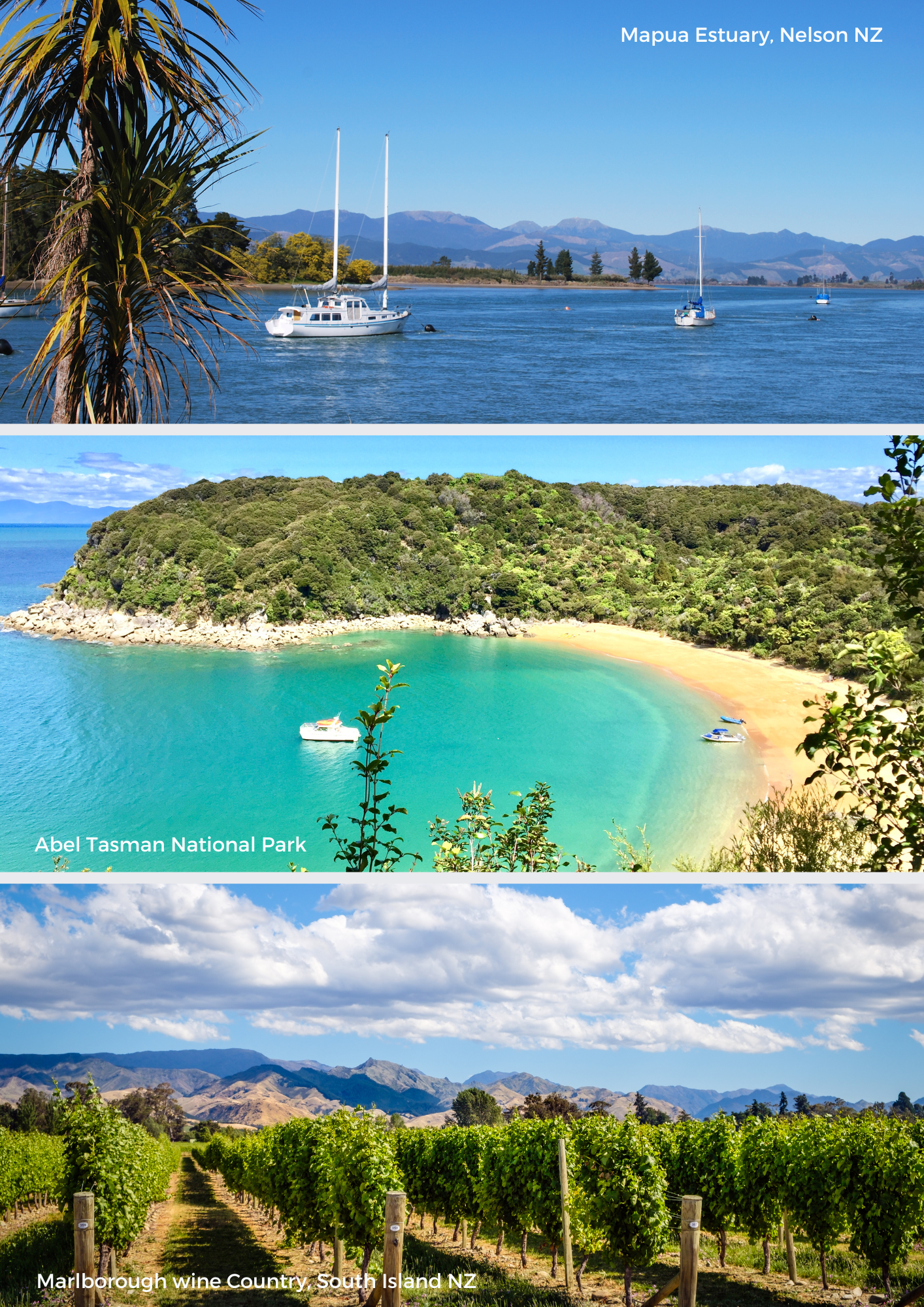
Together, the three regions form a powerful economic and social ecosystem — one that connects primary production with innovation, global export with local community, and lifestyle with learning.
Why Nelson/Tasman/Marlborough – A Lifestyle and Leadership Opportunity
Few places in Aotearoa offer the same balance of professional challenge and personal lifestyle as the Nelson/Tasman/ Marlborough region - the gateway to the Top of the South. For the right leader, this role provides the opportunity to shape the future of tertiary education across three highly connected regions defined by natural beauty, innovation, and community spirit.
The Nelson/Tasman/Marlborough region contributes more than $8 billion to New Zealand’s economy. Its industries are diverse and forward-looking, spanning viticulture, aquaculture, forestry, horticulture, aviation, marine and seafood production, technology, and tourism. From Marlborough’s world-renowned wine sector and marine innovation, to Nelson’s creative and logistics hubs and Tasman’s high-value food and fibre production, the region offers a compelling blend of local industry strength and global reach.
This diversity creates both demand and opportunity for NMIT to deliver vocational and applied programmes that are closely aligned with regional workforce needs and aspirations. Local industry leaders, iwi, and councils across all three regions are deeply engaged in the Institute’s future, recognising NMIT as a key driver of regional capability and innovation.
Population growth is steady and regionally balanced. Tasman has grown by over 10% in the past five years, while Marlborough continues to attract new residents drawn by its wine, aquaculture, and outdoor lifestyle. Across the Top of the South, demographic trends present both challenge and opportunity, an ageing workforce requiring reskilling and transition support, and a younger Māori and multicultural population seeking education and employment pathways close to home. The next Chief Executive will lead in a context where tertiary education can make a tangible and visible difference.
The lifestyle here is exceptional. The region is celebrated as one of New Zealand’s sunniest, with around 2,400 sunshine hours annually and a climate that encourages outdoor living year-round. Golden beaches, three national parks, mountain biking, vineyards, and the Marlborough Sounds are all within easy reach. The region’s compact geography means commutes are short, schools are well-regarded, and the scale of the communities allows leaders to be genuinely connected, professionally, civically, and personally.
In the Nelson/Tasman/Marlborough region, you won’t just lead an institution; you’ll be part of a community that knows and values your impact. This is a leadership role where your influence will be visible, your partnerships will be valued, and your work will help shape the future of an entire region. It’s a rare combination, an opportunity to lead in one of Aotearoa’s most dynamic regional economies while living in a place defined by sunshine, balance, and connection.
Explore more:
- Nelson City Council – Facts & Figures
- Nelson–Tasman Regional Economic Briefing (2024)
- NIWA – Nelson & Tasman Climate
ABOUT US
HardyGroup’s (HG) mission is simple
Find and Grow Great Leaders - and we have been doing exactly that for more than 30 years in public and private health, primary, community and aged care as well as the broader public service.
Our synergistic business model of Executive Search and Recruitment integrated with Executive Leadership and Learning is our unique point of difference.
It ensures our clients can count on us for the lifecycle of their organisations leadership journey and why we are regarded as the leading trans-Tasman partner agency by clients.
When engaging HG you can be confident in a deeply personalised experience and service as nothing matters more to us than relationships and results.